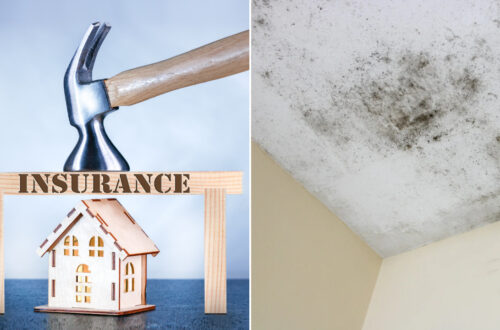

A California homeowner can now help pay for wildfire damage to somebody else’s property, even without filing a claim or living anywhere near the fire.
That may sound unusual, but it is already happening through additional insurance charges introduced after the devastating Los Angeles wildfires of January 2025.
The state’s insurance system allows companies to recover part of the money they contribute toward claims handled by California’s insurer of last resort.
I understand why catastrophic losses must be shared. Insurance has always worked that way. What concerns me is how many additional costs homeowners are being asked to absorb, often with little understanding of where their premiums are going.
The $1 Billion Wildfire Insurance Assessment
The immediate problem began with the Palisades and Eaton fires. California’s FAIR Plan, which provides basic property insurance when conventional coverage is difficult to obtain, faced billions of dollars in claims.
Unlike a government-funded disaster relief program, the FAIR Plan is operated by participating private insurance companies.
When its available resources became insufficient to meet expected payments, it turned to those companies for additional funding.
In February 2025, California Insurance Commissioner Ricardo Lara approved a $1 billion assessment against FAIR Plan member insurers.
The arrangement allowed insurers to recover up to half that assessment from their own policyholders, subject to regulatory approval. Insurers were responsible for absorbing the other half.
That meant as much as $500 million could be passed along to consumers.
The important distinction is that these charges are not limited to homeowners insured through the FAIR Plan.
Customers holding conventional policies can also contribute toward losses associated with properties covered by a completely different insurance arrangement.
A homeowner in Sacramento could therefore help fund claims resulting from fires hundreds of miles away in Los Angeles County.
How Much Are Homeowners Actually Paying?

The surcharge is not a uniform amount charged to every California household. Insurers must obtain approval before collecting temporary supplemental fees. The amount depends on the insurer, the policy premium, and the approved assessment recovery.
According to a July 2026 statement from the California Department of Insurance, the median additional fee for homeowners was $28 per year, with approved fees collected over two years.
That may not sound particularly alarming, but I would caution against looking at the $28 figure in isolation.
Many homeowners are already experiencing substantial increases in their regular premiums. As I discussed in my article about rising home insurance costs, the national average has climbed 46% since 2021.
The FAIR Plan assessment fee is a separate charge, not another name for those regular premium increases.
Consider a household whose annual insurance premium has risen from $2,000 to $3,000. An additional $28 might seem relatively modest.
Yet that family is already paying $1,000 more each year for coverage.
My concern is not that one temporary fee will ruin a household budget. It is that homeowners are increasingly expected to accommodate one additional expense after another.
California’s FAIR Plan Is Getting More Expensive
There is another financial pressure affecting homeowners who depend directly on the FAIR Plan.
Beginning October 15, 2026, the plan introduced an average residential rate increase of 29.1%.
View this post on Instagram
As KQED reported, some policyholders in particularly wildfire-prone areas could see much larger increases, while others might experience smaller increases or reductions.
That 29.1% increase is separate from the assessment-related fees charged by conventional insurers.
The FAIR Plan has also expanded dramatically. California Department of Insurance market figures show approximately 697,000 FAIR Plan residential and commercial policies in June 2026. To me, that raises a question about the direction of the insurance market.
A last-resort insurance arrangement should provide a safety net for households that cannot obtain ordinary coverage. It should not become the long-term solution for an ever-growing portion of the housing market.
The more properties concentrated within that arrangement, the greater the potential consequences when another major disaster occurs.
Should Homeowners Pay for Losses They Never Experienced?

This question deserves more consideration than it usually receives.
Insurance has always depended on pooling risks. Homeowners who never experience a fire help fund claims for those who do. The same principle applies to hailstorms, hurricanes and other insured disasters.
Without that sharing of risk, insurance would be considerably less useful. However, California’s arrangement raises a different question: How much of an insurer’s financial obligation should be transferred to customers holding unrelated policies?
Consumer advocacy organization Consumer Watchdog challenged the surcharges, arguing that participating insurers should bear the assessment costs themselves.
A Los Angeles Superior Court judge rejected that challenge in June 2026, although the organization indicated it was considering further legal action.
Regulators have defended the arrangement as necessary to preserve insurance availability and prevent companies from retreating further from California.
I see merit in both concerns. If insurers cannot operate sustainably, homeowners may lose access to coverage altogether.
But transferring additional expenses to policyholders does not automatically resolve the underlying problem.
I would like to see greater transparency about what consumers are paying, how long the charges will continue, and whether these arrangements are actually encouraging insurers to return to underserved communities.
Insurance Availability Can Affect Property Values

During my years as a residential appraiser, I learned that a home’s market value depends on much more than its square footage, location, and condition.
Buyers also have to consider whether they can afford to own it. Imagine two otherwise comparable homes selling for similar prices.
One can obtain comprehensive insurance at a reasonable annual premium. The other requires expensive FAIR Plan coverage, plus an additional policy to fill gaps in protection. That difference is very important.
California’s Department of Insurance explains that FAIR Plan policies generally do not provide all the protections associated with conventional homeowners insurance, including certain water damage, theft, and liability coverage. Homeowners may need a separate Difference in Conditions policy.
I would expect some buyers to factor those combined insurance expenses into their purchasing decisions.
That does not mean every additional dollar of insurance expense produces an equivalent reduction in home value.
Housing markets rarely work so neatly.
But when insurance becomes sufficiently expensive or difficult to obtain, it can affect affordability, buyer interest, and ultimately a property’s marketability.
That is something I believe sellers, buyers, and appraisers should take increasingly seriously.
What California Homeowners Should Check
The most useful response is to understand exactly what coverage costs and what the policy actually provides.
I would encourage homeowners to review several items before their next renewal:
- Assessment-related charges: Ask whether the premium includes a temporary FAIR Plan assessment recovery fee and when that charge is scheduled to expire.
- Replacement coverage: Check whether dwelling limits reflect current local rebuilding costs rather than simply the home’s market value.
- Coverage exclusions: If using the FAIR Plan, determine whether supplemental insurance is necessary for important risks.
- Alternative quotes: Compare available insurers before automatically renewing, particularly if conventional coverage has become available again.
I would also keep a closer eye on the household’s overall housing budget.
Homeowners are already facing competing demands from repairs, taxes, insurance, and utilities. Recent findings showing that more homeowners lack maintenance budgets suggest that many households have limited financial room for additional expenses.
Cutting necessary insurance protection to save money could leave them exposed to an even larger financial loss.
The Bigger Issue Is What Happens After the Next Fire
California’s $1 billion assessment helped provide funding for claims following an extraordinary disaster. The larger question is what happens when another expensive wildfire strikes.
The Department of Housing and Urban Development allocated more than $1 billion to California to cover recovery costs not paid by insurance or other assistance following the 2018 wildfires that killed 103 people and damaged or destroyed more than 24,000 structures.
https://t.co/FO49aMviGv
— The National Desk (@TND) October 20, 2026
I do not think the state can rely indefinitely on higher premiums, emergency assessments, and temporary consumer surcharges without addressing the concentration of risk that makes these measures necessary.
Homeowners need reliable coverage. Insurers need a financially sustainable market. Communities also need better wildfire protection and realistic rebuilding strategies.
The $28 median annual surcharge may be relatively small.
What it represents is much larger: the growing financial connection between California homeowners, even when their properties and individual insurance policies have very different levels of wildfire exposure.
And that is a housing cost I believe deserves considerably more attention.