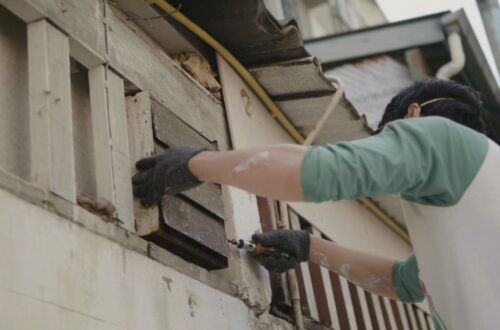

There is a fairly simple reason some homeowners are putting off the kitchen, bathroom, deck, or flooring project they had planned. Something more urgent broke first.
In Angi’s 2026 homeowner research, 23% of people who delayed a project said an unplanned or emergency project had jumped ahead of it.
The latest home repairs versus renovations data shows a clear preference for necessary work: 63% of surveyed homeowners reported maintenance, 58% repairs, and 35% renovations.
I think that distinction tells us quite a lot about the current home-improvement market. People have not suddenly stopped wanting nicer kitchens or updated bathrooms.
Many households are simply being reminded that owning a home comes with two separate budgets: the one you plan and the one the house creates for you.
The second one usually gets priority.
A Repair Can Rearrange an Entire Year of Projects
Imagine a homeowner with $15,000 set aside.
The original plan might look something like this:
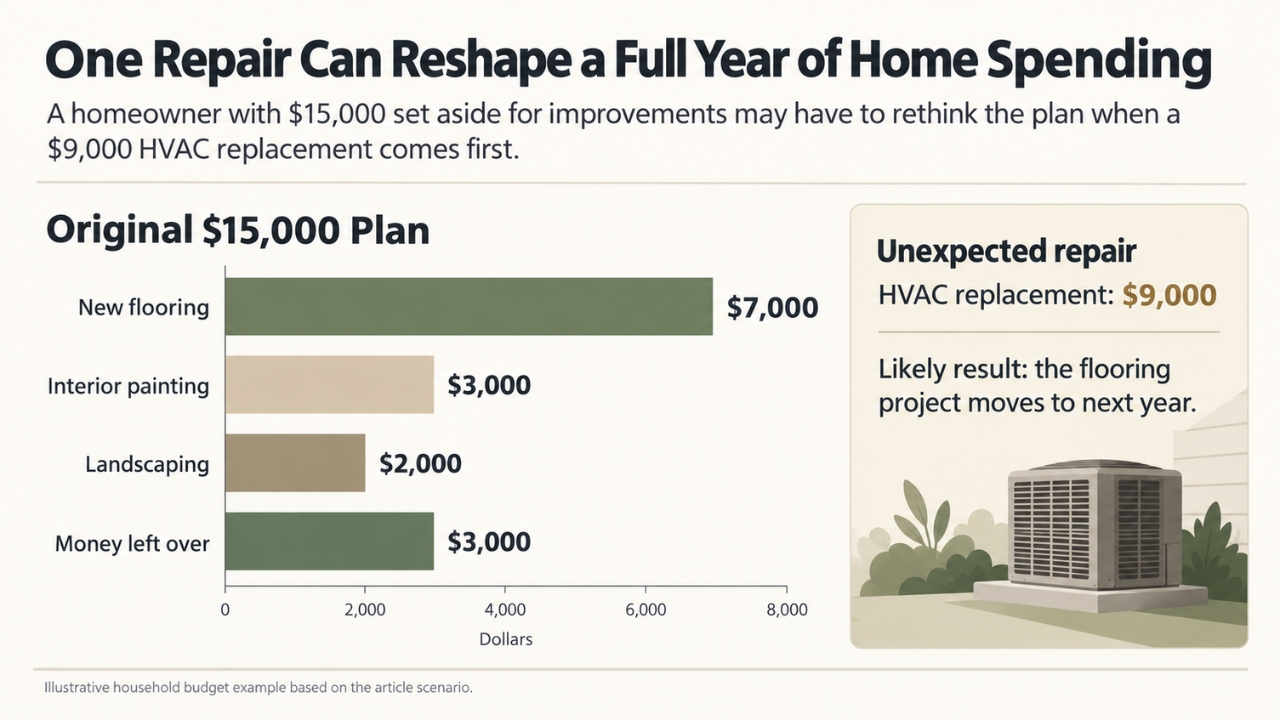
Then the HVAC system fails, and replacement costs $9,000.
At that point, the flooring probably does not become slightly less expensive. It becomes next year’s flooring.
Before you replace a noisy floor, see how to fix squeaky floors. A loose board may need a small repair instead of a new surface.
This is why I have always preferred looking at home costs as a sequence rather than as isolated projects. A repair rarely affects only the repair budget. It changes what comes afterward.
Angi also found that 92% of homeowners who recently hired a professional finished their projects at or above budget. In fact, 43% of homeowners who hired a professional went over budget, and more than one-third of those with over-budget renovations spent at least 30% more than planned.
A 30% overrun is large enough to consume the budget for another project entirely.
Unexpected Housing Costs Are Hardly Unusual

Homeowners can feel particularly unlucky when a major repair arrives without warning.
The data suggests otherwise.
The Federal Reserve reported in May 2026 that 59% of U.S. adults had experienced at least one major unexpected expense during the previous 12 months. Its latest household financial well-being report also found that a major house or appliance repair affected 22% of adults.
Among people who knew how much their unexpected house or appliance repair cost, the typical expense landed between $1,000 and $1,999. More striking to me, Federal Reserve supplemental data shows that 26% reported spending at least $5,000.
That last number deserves more attention.
An unexpected $300 service call is annoying. A surprise $5,000 bill can alter a household’s savings plans for months.
And once repair costs reach that level, postponing an optional renovation starts looking less like pessimism and more like common sense.
Our Homes Are Also Getting Older
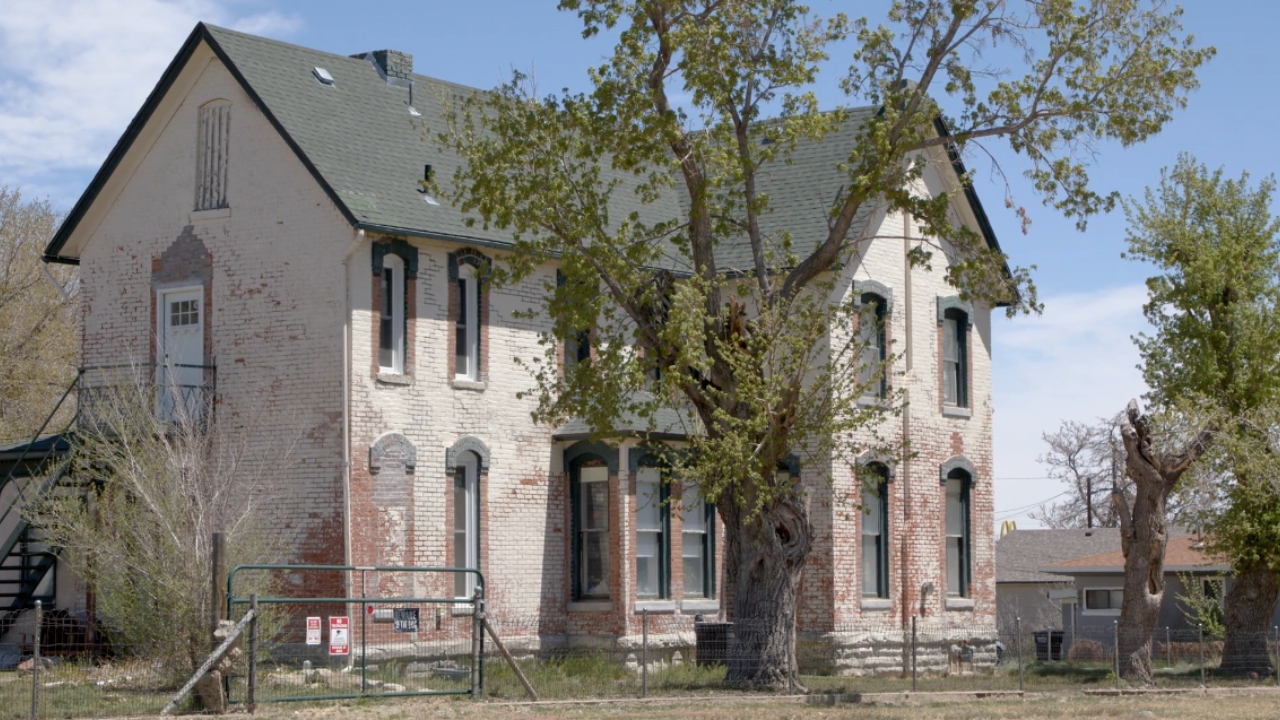
There is a structural reason repairs should remain high on homeowners’ financial radar.
The U.S. housing stock is the oldest it has ever been.
According to Harvard’s Joint Center for Housing Studies, the median age of the housing stock reached 44 years in 2023. Its analysis of America’s aging homes shows that the figure was 39 years in 2013 and just 28 years in 1993.
Older does not automatically mean worse. I appraised plenty of older homes that had been maintained beautifully, and I saw newer properties whose owners had already managed to neglect them.
Still, age changes the odds.
A 40- or 50-year-old property has had more time for roofs, plumbing, electrical systems, windows, HVAC equipment, siding, drainage systems, and other components to reach replacement age.
Harvard’s remodeling industry research found that maintenance spending on homes built before 1980 was 76% higher in 2023 than spending on homes constructed since 2010.
That figure makes intuitive sense to me after years of looking at houses.
Home Age Is Only Half the Story
I would still be careful about using age alone.
The questions I would rather ask are:
- How old are the roof, furnace, air-conditioning system, water heater, windows, and major appliances?
- Has the plumbing or electrical system been modernized?
- Are there existing signs of water intrusion, foundation movement, drainage trouble, or deferred exterior maintenance?
- Which major component is most likely to require replacement during the next three to five years?
Two homes built in 1975 can have completely different financial outlooks.
One may have received $80,000 worth of major systems work during the past decade. The other may still be waiting for it.
That is why I have never been especially fond of maintenance rules based purely on a percentage of home value. They are convenient. Houses are considerably less cooperative.
Renovations Can Create Their Own Repair Bills
There is another wrinkle.
A planned renovation sometimes discovers the unexpected repair.
Houzz’s 2026 remodeling trends data found that 37% of homeowners who renovated in 2025 exceeded their initial budgets. Among those who went over, 52% faced higher-than-expected product or service costs, 32% encountered greater project complexity, and 22% discovered construction-related issues.
View this post on Instagram
That last category will be familiar to anyone who has opened up an older house.
The bathroom remodel reveals aging plumbing. Removing flooring exposes moisture damage. Opening a wall uncovers wiring that should have been addressed years earlier.
The decorative project suddenly becomes a repair project.
I saw versions of this throughout my appraisal career. Homeowners naturally budget for the things they can see: cabinets, tile, appliances, fixtures, and paint.
Unfortunately, some of the most expensive parts of a house spend their lives behind walls, beneath floors, and above ceilings.
Postponing a Renovation Is Not Necessarily Bad News
I would resist interpreting every delayed project as evidence that homeowners are financially struggling.
Sometimes postponement is exactly what responsible ownership looks like.
If a roof needs replacement and the guest bathroom looks dated, the roof wins. If the furnace is failing and the kitchen cabinets are merely unfashionable, I know where I would put the money.
Maintenance protects what you already own. Renovation generally improves it.
That order matters.
Angi’s research shows homeowners currently favoring necessary repairs and preventative maintenance while postponing more discretionary work.
At the same time, 66% still plan to make a major investment in their homes within five years, the highest proportion Angi has recorded in its State of Home Spending research.
So I would describe much of this work as delayed rather than abandoned.
Repair Money Should Not Be Renovation Money

One financial habit I think deserves far more attention is keeping a repair reserve separate from the money earmarked for improvements.
That distinction matters even more now that the share of homeowners with no home maintenance budget has doubled in a single year.
Regular HOA dues also deserve a separate place in the household budget. The median HOA fee was $135 per month in 2025, before any special assessments or private repair costs.
Someone saving $20,000 for a kitchen can easily feel as though they have $20,000 available for the kitchen.
I would ask one more question first.
What happens if the water heater, HVAC system, roof, or sewer line develops a serious problem six months after the remodel?
If the answer is “credit card,” I would reconsider how much of that $20,000 is truly available.
Savings still funded renovations for 84% of homeowners in the Houzz renovation study, while credit-card use increased to 34%.
That worries me more than a delayed renovation does.
Waiting another year for a prettier kitchen is inconvenient. Financing an emergency home repair at expensive credit-card rates can affect a household budget long after the contractor has left.
A HELOC or second mortgage offers another option for homeowners with low-rate first mortgages. But the additional debt can put even more pressure on household finances.
Deferred Maintenance Has a Cost Too
Of course, homeowners cannot simply postpone everything.
Small maintenance issues have an irritating tendency to become expensive repair issues when ignored.
- A minor roof leak can damage insulation and drywall.
- Poor drainage can develop into a foundation problem.
- Failed caulking around a bathroom fixture can eventually create hidden water damage.
Mold can make a neglected leak even more expensive. I would check what home insurance covers for mold damage before I assumed the insurer would pay for repairs.
After years around residential property, I came to view maintenance less as spending and more as damage control.
It is rarely exciting. Nobody invites the neighbors over to admire newly cleaned gutters.
Financially, however, keeping existing systems functioning can be more valuable than adding another visible upgrade.
The House Gets a Vote
Homeownership plans always look tidy on paper.
Replace the floors this year. Remodel the bathroom next year. Do the patio after that.
Real houses do not follow spreadsheets.
Repairs also compete with other ownership expenses, especially as home insurance costs have risen sharply in recent years.
Energy bills add another expense, with average home heat costs forecast at $1,030 this winter.
With 22% of adults reporting a major unexpected house or appliance expense in the Federal Reserve’s latest survey, surprise repairs are clearly affecting how households allocate home-improvement money.
The agency’s discussion of household financial hardships gives further context to how vulnerable many budgets remain when an unexpected expense appears.
At the same time, nearly one-quarter of Angi respondents said an emergency project had caused another project to be delayed.
I think homeowners should plan accordingly rather than treating every breakdown as an extraordinary event.
Before committing the entire savings balance to a renovation, look at the expensive systems already in the house. Consider their age, condition, replacement cost, and what is likely to need attention next.
You will never predict every repair.
You can leave enough room in the budget so that when the house changes the plan, it does not change everything else with it.